
Formed
The Augustine InstituteEducation
4.92.76K Reviews
- Version
- 10.303.1
- Installs
- 100.00K
- Age Rating
- Everyone
Screenshots


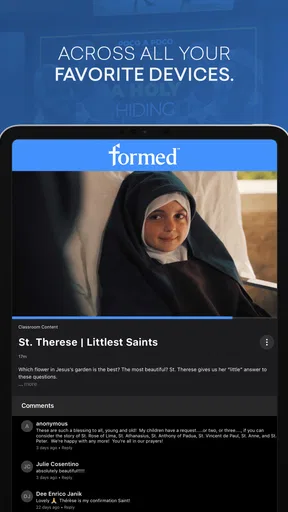
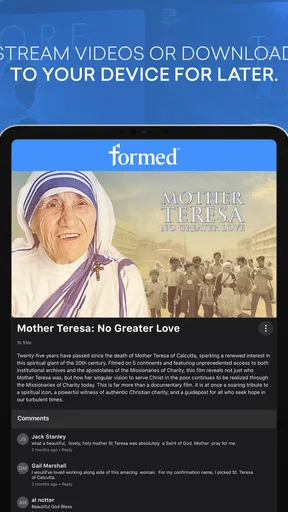
Our Review of Formed
 Analysis by Appyee
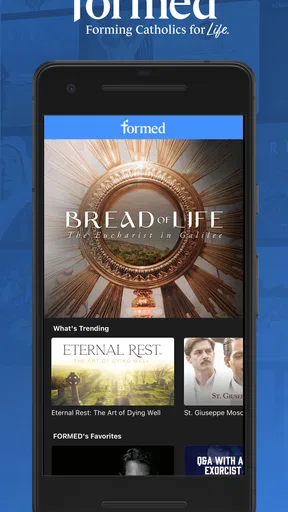
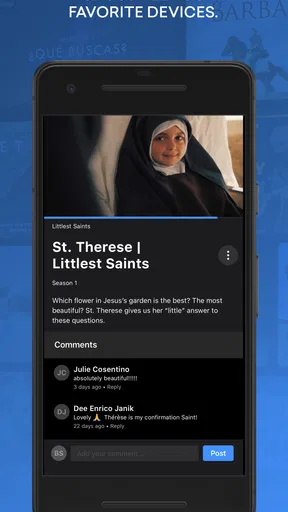
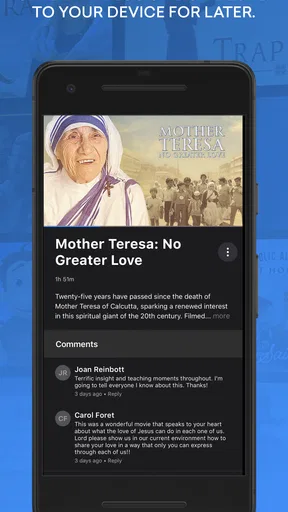
Formed is an education app for Catholics who want a more regular way to learn, pray, and stay connected to their faith. I found its strongest quality in the way it brings several kinds of religious content into one place instead of asking me to search through separate books, videos, podcasts, and study resources. It is developed by The Augustine Institute, and its overall purpose is clear: support Catholic formation for everyday life.
The app is free to install and is suitable for Everyone, which makes it approachable for families as well as individual users. It has built a strong audience, with over 100 thousand installs, a 4.9 average from around 6 thousand ratings, and roughly 3 thousand written reviews. Those figures suggest that Formed is not a niche experiment, but they do not remove the need to decide whether its style suits the way you personally learn.
How Formed fits into a normal Catholic routine
My recommended starting point is not to open the app whenever I happen to remember it. That usually leads to browsing without finishing anything. Formed works better when I give it a defined role in the week. For example, I might use it for a short evening session, choose one subject for several days, and keep a note of the questions or ideas I want to revisit. That simple habit turns the app from a large content shelf into a repeatable learning routine.
It is especially useful for someone returning to Catholic study after a long break. Instead of beginning with an intimidating textbook, I can start with a manageable piece of content and use it to identify the areas I want to understand better. A new Catholic may appreciate the guided feeling, while a practicing Catholic can use the app to add structure to topics that are often approached only occasionally.
A realistic everyday example would be a parent using Formed after the children are asleep. A short session can introduce a theme, while a longer session on the weekend can provide room for reflection or discussion. The same approach works for a parish group: members can explore a shared topic individually, then arrive at a meeting with more specific questions than they would have after an unstructured conversation.
I would not treat it as a replacement for Mass, personal prayer, a Bible, a catechism, or conversation with a priest. Its value is different. It gives learning and reflection a convenient digital home, but it cannot provide the personal guidance that comes from a real community. Users looking for direct pastoral advice should see Formed as preparation for a conversation, not as the conversation itself.
The baseline workflow is simple. I browse until I find a subject that matches my current need, begin with a realistic amount of time available, and avoid opening several unrelated items at once. Afterward, I write down one practical takeaway. That last step matters because religious content can feel meaningful in the moment yet disappear from memory if I move immediately to another video or reading.
Settings and habits worth checking before settling in
One of the first things I would check is how the app behaves on my particular device and connection. Formed is available for Android users running version 8.0 or later, and the current version is 10.303.1. Keeping the app current is sensible, especially for an education service that may adjust its organization or playback experience over time. I would also make sure notifications are not creating pressure. A reminder can support a routine, but too many prompts can make spiritual practice feel like another task list.
It is worth deciding in advance whether the app will be used mainly alone or with others. Solo use favors a personal sequence: one subject, one session, and a short reflection. Group use requires more preparation. I would agree on the topic before opening the app, set a stopping point, and avoid assuming that everyone has the same background knowledge. This prevents the session from becoming a race through content rather than a thoughtful exchange.
Another useful adjustment is to separate discovery from study. Browsing is enjoyable, but it can consume the time intended for learning. I prefer to explore when I have spare time, then return later with a clear choice. This is a small change, yet it makes the app feel calmer and more purposeful. It also helps users who are easily distracted by a large library of appealing subjects.
Families should decide how children will use the service rather than handing over a phone without guidance. The Everyone rating makes the app broadly accessible, but age suitability is not the same as personal context. Younger users may need an adult to explain unfamiliar terms, connect a lesson to family practice, and answer questions that an app cannot handle well. Used together, Formed can become a conversation starter instead of passive screen time.
The free entry point is a genuine advantage for trying the experience without an immediate financial commitment. At the same time, in-app purchases range from $0.99 to $99.99 per item. I would review any purchase screen carefully and decide what level of access is appropriate before subscribing or buying anything. That is particularly important on a shared family device, where a child or guest might otherwise begin a transaction without understanding its cost.
Faster patterns for people who want consistency
Experienced users will get more from Formed by creating a repeatable pattern rather than relying on motivation. One effective pattern is to choose a weekly theme, use the app for focused sessions during the week, and reserve the final session for reviewing notes. The point is not to consume the greatest amount of material. It is to make one idea familiar enough that it affects how I pray, speak, or make decisions.
A second pattern is to match content length to the available moment. If I have only a few minutes, I should not begin something that requires a long uninterrupted sitting. A rushed session can leave me feeling that I failed, even when the problem was simply poor planning. I would rather complete a small, intentional activity than start a substantial one and abandon it halfway through.
For parish groups, I would use a three-part rhythm: individual preparation, a shared discussion, and a final personal action. Before meeting, each person chooses one point that stood out. During the meeting, the group compares interpretations rather than merely summarizing what it consumed. Afterward, everyone identifies one way to carry the topic into the week. This gives the app a role in formation without allowing the screen to become the whole experience.
Another non-obvious benefit is that Formed can help users identify gaps in their knowledge. I may think I want inspirational material, but after a few sessions I might notice that I struggle with basic terminology, Church history, or the relationship between belief and practice. When that happens, I would step back from browsing by mood and choose a more foundational path. The app becomes more valuable when I use it to diagnose what I need to learn, not only what I already enjoy.
I also recommend keeping a simple paper notebook or phone note alongside the app. Write down unfamiliar words, claims that need checking, and questions for a trusted Catholic teacher or priest. This workflow protects against a common weakness of digital learning: the feeling of understanding something because it was presented clearly. A note that says “explain this further” is not a failure; it is evidence that the session led to real inquiry.
Compared with ordinary alternatives, Formed is more convenient than collecting individual Catholic resources from unrelated services. A general video platform may offer more variety, but it also mixes religious material with endless distractions and makes it harder to maintain a coherent learning path. A printed book provides deeper concentration and easier annotation, while Formed is better when I want guided access on a phone. A parish class offers human interaction and accountability, but it may meet less often. In my view, the app works best alongside these options rather than trying to defeat them.
Where the app reaches its limits
The biggest limitation is not a missing button; it is the risk of mistaking access for formation. Having many resources available does not guarantee that I will develop a stronger prayer life or a clearer understanding of Catholic teaching. The app can support discipline, but the discipline still has to come from me. Users who expect an automatic spiritual program may become disappointed when the initial novelty fades.
There is also a difference between consuming content and studying it. A person who prefers printed pages, extensive highlighting, or long-form academic research may find a dedicated book or course more satisfying. Formed is a better fit for guided digital learning and flexible sessions than for building a formal scholarly archive. I would choose another tool when precise citation, detailed cross-referencing, or intensive note management is the main goal.
Some users may also find the browsing experience demanding. A broad collection can create decision fatigue, especially for someone who opens the app without a question in mind. My solution is to arrive with a narrow purpose: learn about one subject, prepare for one discussion, or reflect on one aspect of Catholic life. If I cannot state that purpose in a sentence, I am probably not ready to choose effectively.
In-app purchases are another point that deserves attention. Although the app is free, the presence of paid items means that “free” should not be interpreted as every part of the experience being costless. I would involve other household members in the decision, check the purchase details, and avoid buying simply because a recommendation appears at the end of an engaging session. The right choice depends on how regularly the app will be used and whether its paid material fills a real need.
People seeking a nonreligious education platform should skip Formed because its identity is specifically Catholic. Likewise, someone wanting live tutoring, direct counseling, or a highly interactive classroom will likely be better served by a parish program, teacher, or specialist service. The app is also not ideal for a user who dislikes learning through a phone. In those cases, a physical book or face-to-face group will provide a more natural experience.
On the other hand, I would recommend trying it to a Catholic who wants a practical starting point, a family looking for shared material, or a parish group that needs support between meetings. The Everyone rating makes it accessible across a household, while the free installation lowers the barrier to testing the workflow. The important question is not whether it contains enough material; it is whether I am willing to return regularly and engage with what I find.
My verdict after building a repeatable workflow
Formed succeeds because it makes Catholic education easier to fit into ordinary life. It gives me a single place to begin, supports short or longer sessions, and can serve both private reflection and group preparation. The strongest results come from using it deliberately: choose a theme, limit browsing, take notes, and connect digital learning with prayer, conversation, or action outside the app.
The app is not a substitute for the Church community, a knowledgeable guide, or serious reading when a subject requires depth. Its content can also become passive entertainment if I keep moving from one item to another without reflection. Those limitations are real, but they are manageable when I treat Formed as a tool within a wider Catholic routine rather than as a complete spiritual solution.
The Augustine Institute has created an approachable education app with a clear audience and a useful free starting point. Its 4.9 average shows that many users value the experience, while the wide range of purchase prices means I would still make a careful decision before paying for anything. For me, the best reason to install it is not the size of its library but the possibility of turning scattered interest into a steady habit.
My final recommendation is simple: try Formed if you want Catholic learning that can follow your schedule, but begin with one concrete goal and a modest routine. If you use the app that way, it can become a helpful companion for formation. If you want live guidance, academic depth, or a completely offline experience, choose a parish group, book, or teacher instead.
Verdict
Strengths of Formed
- Clean interface makes form creation easy for beginners.
- Supports multiple question types for flexible surveys.
- Useful templates can reduce setup time.
- Responses are organized for quick review and analysis.
- Works well for collecting feedback on mobile devices.
Limitations of Formed
- Advanced customization may require a paid plan.
- Some features depend on an active internet connection.
- Large forms can feel slower on older devices.
- Export options may be limited for certain response formats.
- Notification controls could be more detailed for busy teams.
Similar Picks in This Category
View All
Duolingo: Language Lessons
Duolingo4.7

Google Classroom
Google LLC2.8

Unacademy: Learn & Crack Exams
Unacademy3.2

Bible App for Kids
Life.Church4.4

Cake - Learn English & Korean
Cake Corp.4.7

Brainly: AI Homework Helper
Brainly4.5
Frequently Asked Questions
What is Formed and what can I use it for?
Formed is an app designed to help users organize and manage information through a structured digital experience. Depending on the version and platform, it may be useful for creating, completing, or tracking forms, records, plans, or other organized content. Before downloading, check the app’s official description to confirm that its specific tools match your needs and that it supports your device and intended workflow.
Is Formed free to download and use?
Formed may be available as a free download, but some features or services can require in-app purchases, a subscription, or an account. The exact pricing can vary between Android and iOS, and promotional trials may have automatic renewal conditions. I recommend reviewing the store listing and subscription details carefully before confirming payment, especially if you only want to test the app temporarily.
Does Formed require an account or an internet connection?
Whether you need an account depends on which features you plan to use. Basic sections may be accessible immediately, while saving data, synchronizing content, using cloud services, or accessing personalized tools may require registration. An internet connection is commonly needed for sign-in, synchronization, updates, and online functions, so offline availability should be confirmed in the app’s current store description.
Is my personal information safe when using Formed?
Before using Formed, review its privacy policy and the data-safety information shown on the Google Play Store or Apple App Store. Apps that handle forms, profiles, documents, or personal records may request access to information that is sensitive. Only grant permissions that are necessary, use a strong password if an account is required, and check how your data is stored, shared, and deleted.
Which devices are compatible with Formed?
Formed’s compatibility depends on the operating system, device model, and minimum software version required by the developer. Check the official store page before downloading to confirm whether your Android phone, iPhone, or tablet is supported. It is also worth checking available storage and recent user reviews, since performance can differ between older devices and newer hardware.
